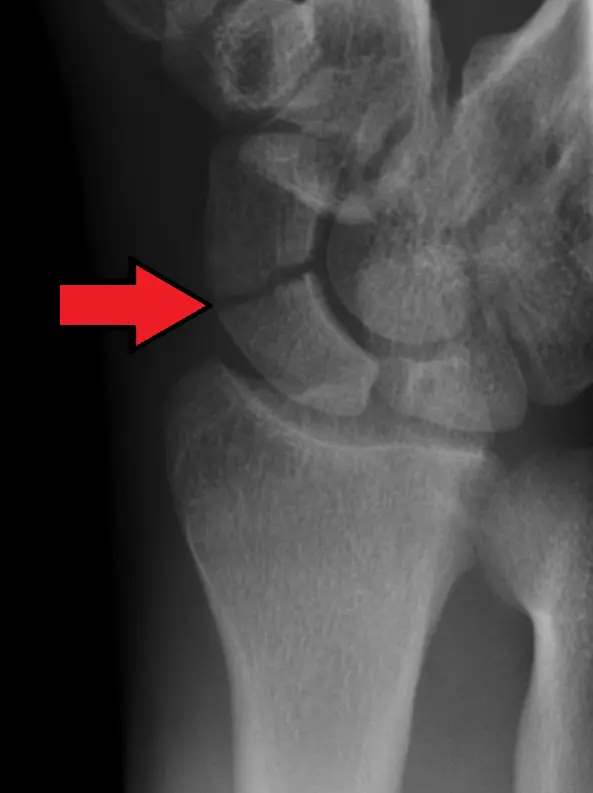
A scaphoid fracture is a break in the scaphoid bone, a small bone near the base of your thumb in the wrist. It’s one of the most common fractures in the hand and wrist and often happens from a fall onto an outstretched hand.
People usually feel pain and tenderness on the thumb side of the wrist (sometimes called the “anatomic snuffbox”).
When to see specialist
There may be swelling, bruising, and difficulty gripping or pinching objects. The pain can worsen with wrist movement, and some people notice reduced strength in their hand. If not treated properly, it can lead to long-term problems like arthritis.
Causes & risk factor
The main cause of a scaphoid fracture is trauma, typically a fall onto an outstretched hand.
COMMON RISK FACTOR
Smoking — reduces blood flow to the bone, making healing harder.
Diabetes — can impair blood supply and slow recovery.
Older age or poor bone health can contribute.
The scaphoid has a limited blood supply, especially in its lower part, which makes fractures there more prone to not healing properly.
Unfortunately, scaphoid fractures are often hard to see on xrays and can be missed or misdiagnosed. This can lead to more serious consequences for the wrist down the track.
Treatment Options
Treatment depends on the fracture’s location, displacement (how much the bones have shifted), and stability.
non-surgical
Cast immobilisation
A thumb spica cast (covering the thumb and wrist) is used for stable, non-displaced fractures.
Success rate
Healing typically takes 8–12 weeks. Success rate strongly depends on the fracture location.
surgical
Internal fixation with a screw
This usually recommended for displaced, unstable, or proximal fractures. Sometimes a small plate or a bone graft is used.