
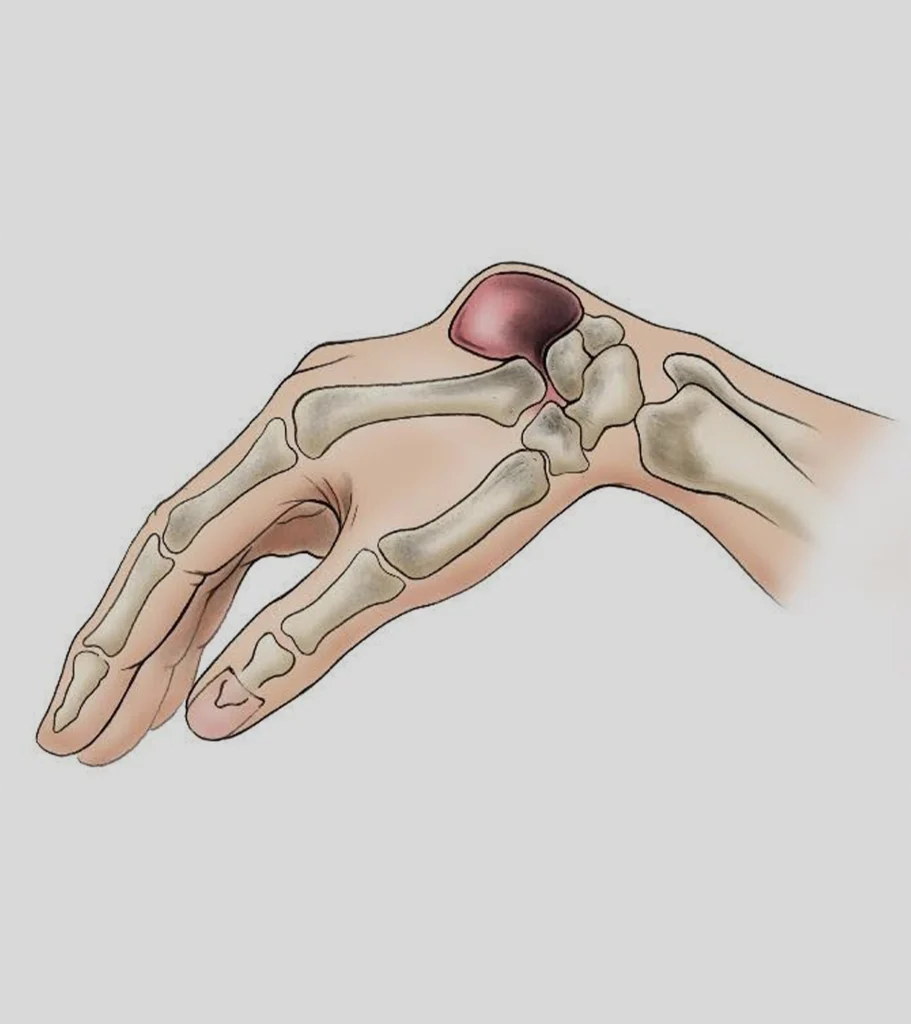
A wrist ganglion, also known as a ganglion cyst, is a common, non-cancerous lump that forms on or near the wrist joint or tendons. It’s a small sac filled with a thick, jelly-like fluid that comes from the lubricating fluid in the spaces between two bones. These cysts are usually harmless and can vary in size, sometimes growing as big as a golf ball or shrinking on their own. They often appear on the back of the wrist but can also show up on the palm side or at the base of the fingers.
Most people notice a ganglion cyst as a visible bump under the skin that may feel firm or spongy.
Common signs and symptoms include mild pain or discomfort, especially when bending the wrist or gripping objects. You might also experience tenderness, a feeling of weakness in the hand, or occasional tingling if the cyst presses on nearby nerves. In many cases, there are no symptoms at all, and the cyst is just a cosmetic concern.
The exact cause of wrist ganglions isn’t fully understood, but they often develop when fluid leaks from a joint or tendon sheath, forming a cyst due to irritation or minor damage. Several factors can contribute to this.
Women between 20 and 40 years old are most commonly affected
Treatment depends on symptoms and duration.
Excision: Removing the cyst through a small incision.
High success rate and fast recovery. Ganglions on the front (palm side) of the hand have a higher recurrence rate of around 20%.