
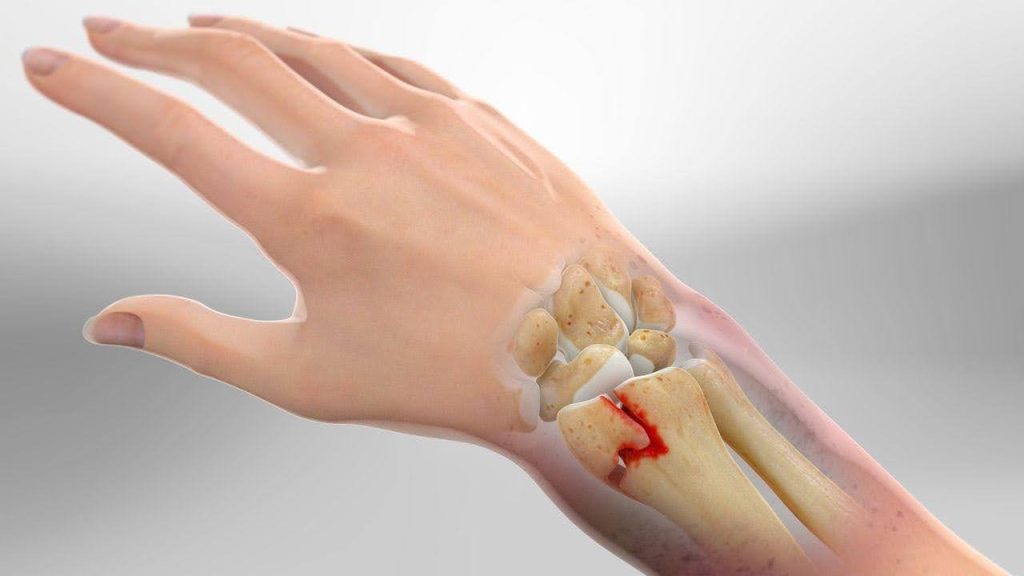
A distal radius fracture, often called a broken wrist, is a break in the larger forearm bone (the radius) near the wrist joint. It’s one of the most common fractures, especially from falling on an outstretched hand. The break can be simple or complex, sometimes involving the joint surface or shifting bones out of place, leading to a “dinner fork” deformity where the wrist looks bent.
Usual signs and symptoms appear right away: intense pain at the wrist, swelling, bruising, and tenderness. The wrist may look deformed, and you might have trouble moving it or gripping things. In severe cases, there can be numbness or tingling in the fingers if nerves are affected.
The main cause is trauma, typically a fall onto an outstretched hand (FOOSH injury). This is common in slips, sports, or car accidents.
Treatment depends on multiple factors, including the fracture’s stability, number of pieces (comminution), position of the pieces and the patient’s age.
For stable, non-displaced fractures, simply putting the patient in a plaster for 4-6 weeks will give a great result. For slightly displaced fractures, a manipulation and then plaster (called a closed reduction) will often be enough. Physiotherapy is helpful post cast to regain motion of the wrist.

The most common method for this is open reduction internal fixation (ORIF) using a small plate and screws. Sometimes two incisions and plates a required for the very comminuted (lots of pieces) fractures.
Success rates vary, based on the complexity of the fracture, but are usually around 90%.
Physiotherapy is again very important post operatively to get back a much movement of the wrist as possible. Common complications include stiffness and the plate irritating nearby tendons. Full recovery can take up to 12 months.