
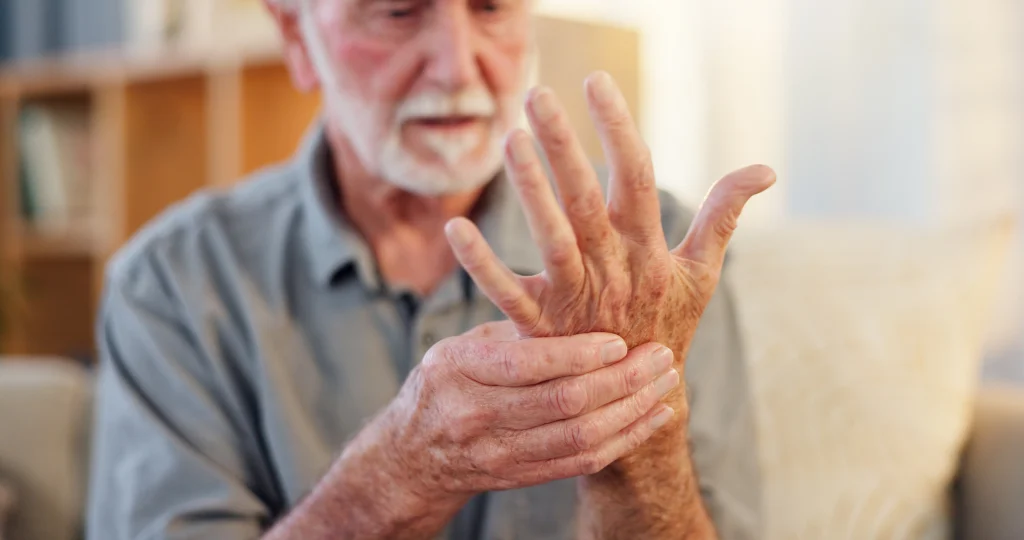
Base of thumb arthritis, also known as basal thumb arthritis or thumb CMC (carpometacarpal) arthritis, is a common form of osteoarthritis that affects the joint at the base of the thumb where it meets the wrist. Over time, the smooth cartilage that cushions the bones wears away, causing the bones to rub together. This leads to pain, swelling, and stiffness. It’s one of the most frequent types of hand arthritis, especially in people over 40.
SIGNS YOU MIGHT NOTICE
Many people experience reduced thumb strength, making everyday tasks harder, along with stiffness (especially in the morning), decreased range of motion, and sometimes a grinding sensation when moving the thumb.
The main cause is wear and tear on the joint over time, leading to cartilage breakdown. Several factors can contribute or increase the risk.
Treatment starts with non-surgical approaches to relieve pain and improve function. Many patients manage well without surgery.
Relieve pain and improve function. Many patients manage well without surgery.
These methods provide good to excellent symptom control for around 50% of patients.
Surgery can help. Common procedures
Around 95%, with most patients reporting significant pain relief and improved function. Recovery is long with at least 8 weeks in a plaster or splint.