
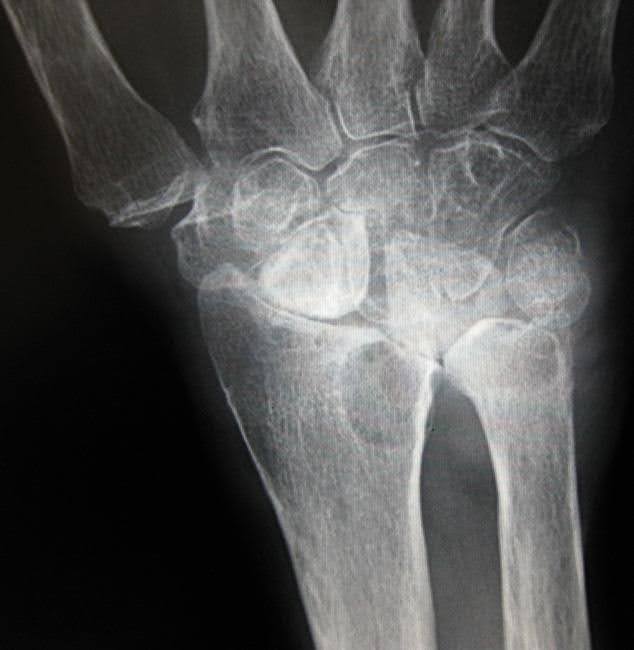
Wrist Arthritis

What it is

Overview

Wrist arthritis is a condition where the cartilage in the joints of your wrist become damaged, leading to pain and reduced movement. When the cartilage between the bones wears away, the bones rub together, causing the symptoms of pain and reduced movement. There are different types, including osteoarthritis, rheumatoid arthritis, and post-traumatic arthritis (after injury). It’s more common in people over 50 but can affect anyone.

Common signs and symptoms include:

  • Persistent pain in the wrist, especially during activities like lifting or twisting
  • Swelling and tenderness around the joint
  • Stiffness, making it hard to bend or rotate the wrist, often worse in the morning
  • Weakness or a grinding sensation (crepitus) when moving
  • Reduced range of motion, affecting daily tasks like writing or holding objects
When to see specialist

Symptoms usually start gradually and can worsen over time if untreated.

Causes & risk factor

Wrist arthritis results from a mix of factors that damage the joint over time.

COMMON RISK FACTOR
  • Age and genetics: Natural aging thins cartilage, and family history increases risk, especially for rheumatoid arthritis.
  • Trauma or injury: Past fractures, sprains, or dislocations can lead to uneven joint wear and post-traumatic arthritis.
  • Overuse or repetitive stress: Jobs or sports involving constant wrist motion, like typing or manual labour, accelerate breakdown.
  • Other factors: Smoking impairs blood flow and healing, worsening inflammation. Diabetes can affect joint health and speed up progression due to poor circulation and nerve issues.

Often, multiple factors combine to trigger the condition.

Treatment Options

There’s no cure for wrist arthritis, but treatments focus on pain relief, improving function, and slowing damage. Most start with non-surgical options.

non-surgical

First-line Option Treatment

  • Rest and splinting to reduce strain
  • Physical therapy for strengthening and flexibility
  • Simple pain killers like Paracetamol and Ibuprofen 
  • Steroid injections to ease inflammation
Success rate

Help 70-80% of patients manage symptoms effectively without surgery.

surgical

If non-surgical don't help and pain interferes with life

  • Proximal row carpectomy (PRC): Removes damaged bones to create a new joint. This sacrifices some wrist strength but maintains reasonable movement.
  • Wrist fusion (arthrodesis): Joins the bones of the wrist. This sacrifices movement but maintains reasonable grip strength.
  • Wrist replacement (arthroplasty): Replaces the joint with an implant for better movement. These can wear out or become loose with time.
  • The decision regarding which of these options is best for you depends on several factors such as your type of arthritis, age, health and how physical your job and leisure activities are.
Success rate

Roughly 85% are still doing well after 10 years. 

Ready to talk?