
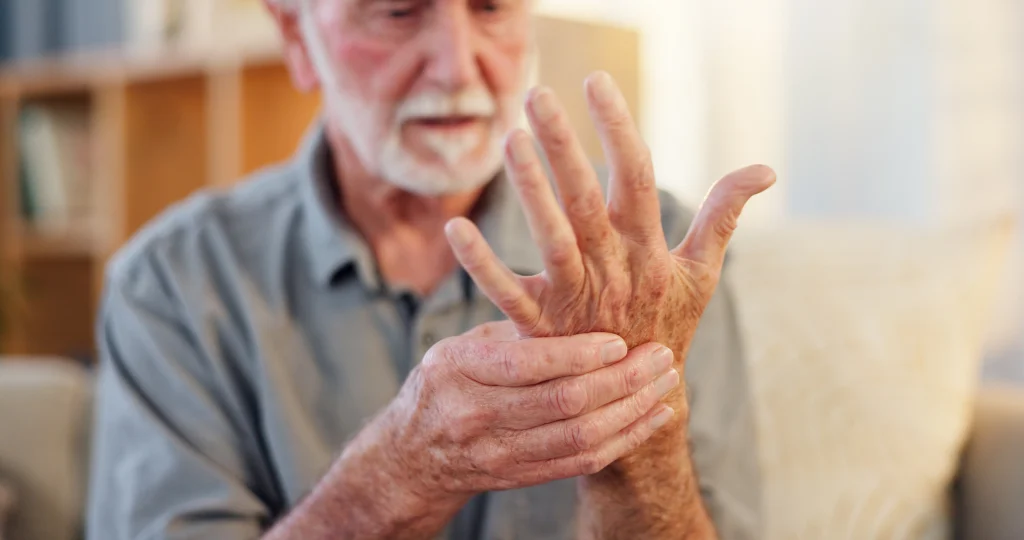
Base of Thumb Arthritis

What it is

Overview

Base of thumb arthritis, also known as basal thumb arthritis or thumb CMC (carpometacarpal) arthritis, is a common form of osteoarthritis that affects the joint at the base of the thumb where it meets the wrist. Over time, the smooth cartilage that cushions the bones wears away, causing the bones to rub together. This leads to pain, swelling, and stiffness. It’s one of the most frequent types of hand arthritis, especially in people over 40.

SIGNS YOU MIGHT NOTICE

  • Pain at the base of the thumb that worsens with activities like
    • gripping,
    • pinching,
    • turning keys, or opening jars.
  • Swelling, tenderness, or a bony bump at the joint.

When to see specialist

Many people experience reduced thumb strength, making everyday tasks harder, along with stiffness (especially in the morning), decreased range of motion, and sometimes a grinding sensation when moving the thumb.

Causes & risk factor

The main cause is wear and tear on the joint over time, leading to cartilage breakdown. Several factors can contribute or increase the risk.

COMMON RISK FACTOR
  • Age is a key factor, as it becomes more common after 40. Women are affected much more often than men, possibly due to hormonal changes or joint differences.
  • Genetics play a role—if family members have thumb arthritis or loose joints, you’re more likely to develop it. Previous trauma, such as fractures or sprains at the thumb base, can damage the joint and trigger arthritis later.
  • Overuse from repetitive pinching or gripping activities (like in certain jobs or hobbies) adds stress to the joint.
  • Other conditions like obesity, diabetes, or inflammatory arthritis can worsen joint health, though smoking’s direct link is less clear but may impair healing and circulation.

Treatment Options

Treatment starts with non-surgical approaches to relieve pain and improve function. Many patients manage well without surgery.

non-surgical

First-line option

Relieve pain and improve function. Many patients manage well without surgery.

  • Activity modification and hand therapy (exercises to strengthen muscles).
  • Thumb splints or braces to rest and support the joint.
  • Anti-inflammatory medications (like Ibuprofen) or pain relievers.
  • Corticosteroid injections into the joint for temporary relief. 
Success rate

These methods provide good to excellent symptom control for around 50% of patients.

surgical

If symptoms persist despite conservative treatment

Surgery can help. Common procedures

  • Trapeziectomy (removing the damaged bone, often with ligament reconstruction and tendon interposition, known as LRTI)—the most common option.
  • Fusion: this is usually done in the younger patient with a high physical demand job such as labourers. Good long-term results but again, patient must wear a plaster for 6-8 weeks post op.
  • Joint replacement: This is a relatively new option. Risks include stiffness or weakness, but long-term satisfaction is high in properly selected patients
Success rate

Around 95%, with most patients reporting significant pain relief and improved function. Recovery is long with at least 8 weeks in a plaster or splint.

Ready to talk?